
Personal Finance Guide for Beginners in the USA (2026)
Learn the basics of personal finance in the USA, including credit scores, credit cards, personal loans, insurance, budgeting, saving, and responsible money manageme
Managing money can feel complicated, especially when you’re trying to understand credit cards, loans, insurance, savings, and everyday expenses at the same time
A strong financial foundation starts with a few basic habits: create a budget, build emergency savings, understand your credit, manage debt carefully, and protect yourself with appropriate insurance.
This beginner’s guide explains the major areas of personal finance and provides practical steps you can use to organize your financial life.
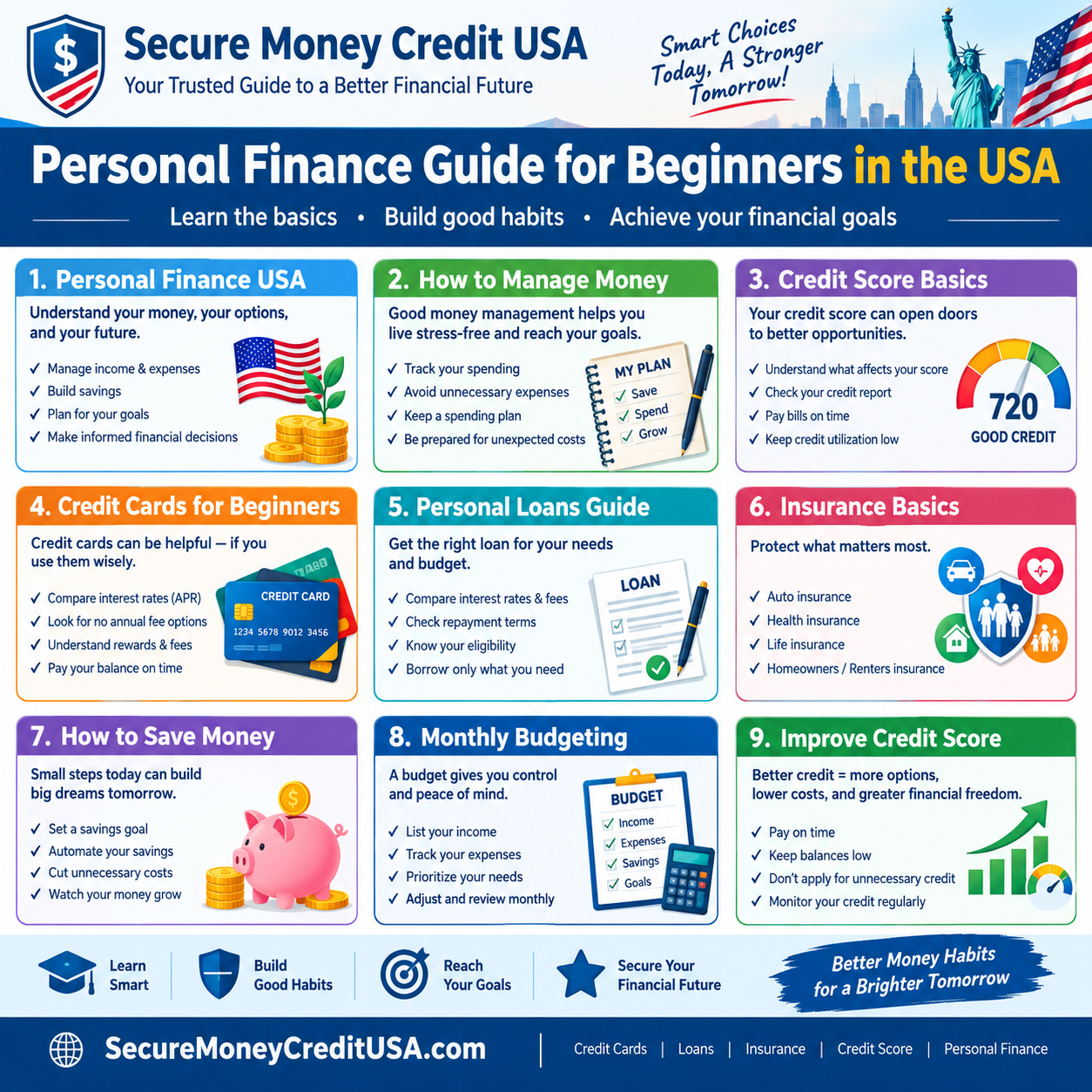
personal finance guide for beginner:
personal finance
how to manage money
credit score
basicscredit cards for beginners
personal loans guide
Insurance basics
how to save money
monthly budgeting
improve credit score
1. What Is Personal Finance?
Personal finance is the process of managing your money and financial decisions.
It includes:
Income, Expenses, Banking, Credit cards, Credit scores, Loans, Insurance,💵 Saving,📈 Investing,🎯 Financial goals
The goal isn’t simply to make more money. It’s also to manage the money you have effectively and make informed financial decisions.
Personal Finance Guide For beginners in the USA.credit,loans, insurance, savings,
2.Create a Monthly Budget
A budget helps you understand where your money is going.
Income:-Salary,Self-employment, income,Side income, otherincome
Expenses:-Housing, Utilities, Food, Transport insurance ,Debt payments Entertainment,Subscriptions,Other Expenses
then compare your total income with your total expenses.
Simple formula :-Income − Expenses = Money available for saving, debt repayment, or other goals
Review your budget regularly and adjust it when your income or expenses change.
3. Build an Emergency Fund
An emergency fund is money set aside for unexpected expenses.
Examples include:
Car repairs,Unexpected medical Bills,home Repairs,temporary loss of Income, other unexpected Costs
start with an amount that is realistic for your situation. Then gradually build your savings.
Keep emergency savings somewhere accessible and appropriate for short-term needs rather than taking unnecessary investment risk with money you may need soon.
4. Understand Credit Cards Before Applying
Credit cards can be useful financial tools, but they should be used carefully.
Before applying for a credit card, compare:
Annualfee,APR,introductoryAPR,Rewards,Balance-transfer Terms,foreign transaction fees,Late-payment Fees, credit Requirements, other account Terms
don’t choose a card only because it offers a large rewards bonus.Consider whether the card fits your spending habits and whether you can manage the balance responsibly.
Important
Paying only the minimum payment can result in interest charges and may take longer to repay a balance.
5.Understand Your Credit Score
your credit score is one part of your overall credit profile.
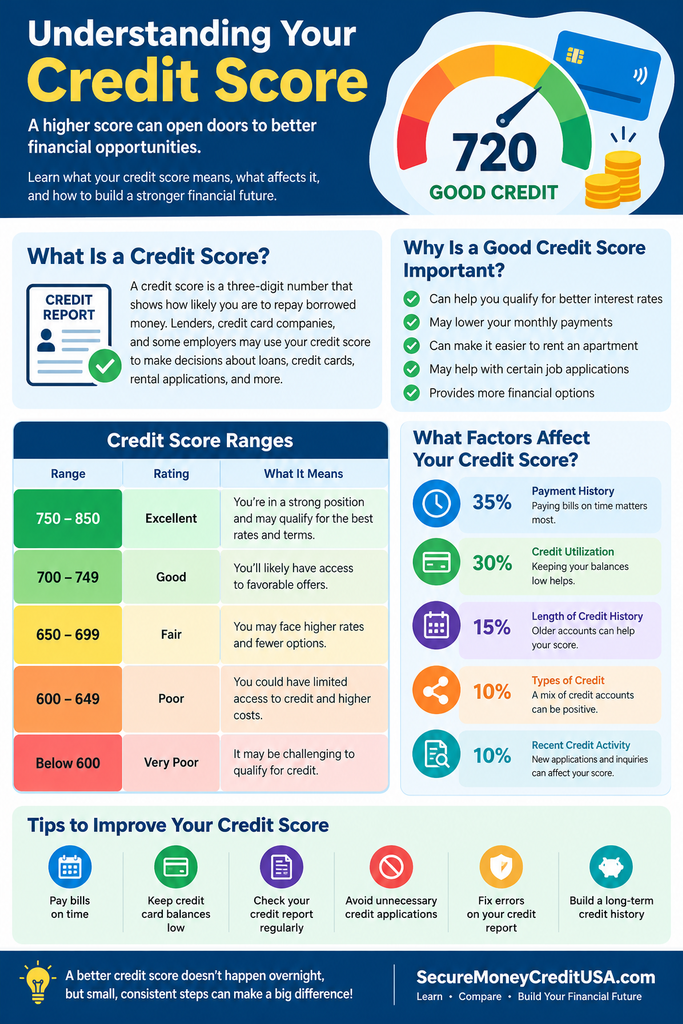
Credit-scoring models can consider information such as:
Payment history
Credit utilization
Length of credit History,
types of Credit,
recent credit Application
different scoring models can produce different scores.
Your credit information may be considered when applying for products such as credit cards, auto loans, personal loans, and mortgages.
Good credit habits
- Pay bills on time
- Monitor your credit reports
- Keep track of credit-card balances
- Avoid unnecessary applications
- Review your accounts for unfamiliar activity
6. Personal Loans: What You Should Know
A personal loan allows you to borrow money and repay it according to the lender’s terms.
Before accepting a loan, compare:
- Annual percentage rate (APR)
- Loan amount
- Repayment period
- Monthly payment
- origination fees
- Late fees
- Prepayment terms
- Total cost of borrowing
Don’t focus only on the monthly payment.
A longer repayment period may reduce the monthly payment while increasing the total interest paid.
Always read the complete loan agreement before accepting an offer.
7. Understand Insurance
Insurance can help protect you from certain financial losses.
Depending on your situation, you may consider:
*Auto Insurance
Can provide coverage for certain vehicle-related losses and liabilities depending on the policy.
*Health Insurance
Helps cover eligible healthcare costs according to the policy.
Homeowners or Renters Insurance
Can provide different forms of protection for your home, belongings, and liability depending on the policy.
*Life Insurance
Can provide financial protection for beneficiaries if the insured person dies, subject to policy terms.
Don’t compare insurance based only on price. Look at coverage, exclusions, deductibles, limits, and other policy terms.
8. Save Money Automatically
Automation can make saving easier.
For example, you could arrange an automatic transfer from your checking account to a savings account after receiving income
Even small regular contributions can help build a savings habit.
Before choosing a savings product, compare its interest rate, fees, withdrawal rules, minimum balance requirements, and other terms.
9. Protect Your Personal Information
Financial security is an important part of personal finance.
Never casually share:
- Passwords
- One-time verification codes
- Bank login information
- Full payment-card details
- Social Security numbers
- Be cautious with unexpected emails
- text message
- Phone call
- Website asking finance information
10. Check Your Credit Reports
Reviewing your credit reports can help you understand what information is being reported about you and identify potential errors or unfamiliar accounts.
For U.S. consumers, AnnualCreditReport.com is the federally authorized source for free credit reports.
If you find information you believe is inaccurate, follow the appropriate dispute process with the relevant credit-reporting company and/or information provider.
11. Set Financial Goals
don’t manage money without a goal.
Your goals might include:
- Building an emergency fund🎯
- Paying off credit-card debt🎯
- Improving your credit profile🎯
- Saving for a vehicle🎯
- Saving for a home🎯
- Preparing for retirement🎯
- Building long-term savings
- Give each goal a target amount and timeframe that is realistic for your circumstances.
12. Common Personal Finance Mistakes
Avoid these common mistakes:
- Spending more than you can afford
- Ignoring credit-card interest
- Missing payments
- Taking loans without comparing total costs
- Buying insurance based only on the cheapest premium
- Having no emergency savings
- Applying for financial products without reading the terms
- Trusting “guaranteed” financial offers
- Ignoring suspicious activity on financial accounts
13. A Simple Financial Checklist
Every month
- ☑ Review your income and expenses
- ☑ Pay bills on time
- ☑ Check your account activity
- ☑ Save according to your plan☑ Review debt balances
- ☑ Avoid unnecessary spendingEvery few months
- ☑ Review your budget
- ☑ Review your insurance coverage
- ☑ Check your credit information
- ☑ Review financial goals
- ☑ Compare recurring expenses
Managing money is an important life skill. Whether you have just started working, are building your credit history, or want to organize your monthly expenses, understanding personal finance can help you make informed decisions.
Personal finance includes budgeting, saving, managing debt, understanding credit scores, choosing financial products, and protecting yourself against unexpected expenses.
14.Why Is Your Credit Score Important?
A credit score may affect your ability to qualify for certain financial products and the terms you are offered.
For example, lenders may consider credit information when evaluating:
- Credit card Applications
- personal loan applications
- Auto loans
- Mortgages
- Other forms of credit
- A stronger credit profile may help you qualify for more favorable terms, but approval and rates depend on many factors.
How Often Should You Check Your Credit?
Regularly reviewing your credit reports can help you understand your credit history and identify potentially inaccurate or unfamiliar information.
Consumers can obtain their credit reports through AnnualCreditReport.com, the federally authorized source for free credit reports from the three nationwide credit reporting companies.
Understanding your credit score is an important part of managing personal finances. By paying bills on time, managing credit responsibly, reviewing your credit reports, and avoiding unnecessary debt, you can develop healthier credit habits over time.
15.What Is Personal Finance?
Personal finance means managing your income, expenses, savings, debt, and financial goals.
It includes several important areas:
- Budgeting: Planning how to use your income.
- Saving: Setting money aside for future needs.
- Credit management: Understanding credit reports, scores, and credit cards.
- Debt management: Managing loans and repayment obligations.
- Insurance: Understanding ways to protect against certain financial risks.
- Financial planning: Preparing for short-term and long-term goals.
Your financial priorities will depend on your income, household responsibilities, debts, and personal circumstances.
16. How to Create a Monthly Budget
A monthly budget helps you understand how much money you receive and where it goes.
Start by calculating your monthly take-home income. Include regular income sources you can reasonably expect.
Next, list your expenses.
Essential expenses,Housing, Food,Utilities, transportation,Healthcare,Insurance ,Minimum debt payments
Monthly income − Monthly expenses = Remaining Money
if your expenses exceed your income, review spending categories and identify realistic adjustments. If you have money remaining, consider allocating it toward savings, additional debt repayment, or other financial goals.
17. Why Emergency Savings Matter
Unexpected expenses can disrupt even a well-planned budget.
An emergency fund can help cover situations such as car repairs, urgent household expenses, or temporary income loss.
Start with an amount that is manageable for your situation. You can build your savings gradually through regular contributions.
Consider keeping emergency savings in an accessible account with clear fees and withdrawal terms.
Avoid taking unnecessary investment risks with money you may need immediately.
18. Protect Your Financial Information
financial security is an important part of money management.
To reduce the risk of fraud:
- Use strong, unique passwords.
- Enable multifactor authentication when available
- Never share one-time verification codes.
- Be cautious of unexpected messages requesting payment.
- Verify lenders and financial companies before sharing sensitive information.
- Review bank and credit-card statements for unfamiliar transactions.
Be especially cautious of loan offers that promise guaranteed approval in exchange for an upfront payment. Verify the company and the offer independently before proceeding.
19. Set Realistic Financial Goals
financial goals give your money a purpose.
Examples include:
- Building emergency savings
- Paying down credit-card balances
- Saving for a car
- Preparing for a home purchase
- Setting aside money for education
- Planning for retirement
Managing money starts with understanding your financial situation and making informed decisions.
Managing your personal finances starts with understanding your options and making informed decisions.
Whether you are learning about credit scores, comparing credit cards, exploring personal loans, or building a budget, small and consistent steps can help you work toward your financial goals.
Create a budget, build savings gradually, understand credit, compare borrowing costs, review insurance coverage, and protect your financial information.
Consumer Financial Protection Bureau (CFPB)
Anchor text: consumer financial education Resources
link: https://www.consumerfinance.gov/consumer-tools/ https://www.consumerfinance.gov/consumer-tools/
Keep learning, compare your options carefully, and make financial decisions that fit your needs and budget.
At securemoneycreditusa@securemoneycreditusagmail-com we aim to provide easy-to-understand educational guides covering credit cards, personal loans, insurance, credit scores, saving, budgeting, and personal finance.our goal is to explain personal finance topics in clear, accessible language so readers can better understand their options.
This article is for general educational purposes only and is not individualized financial, legal, investment, or insurance advice.