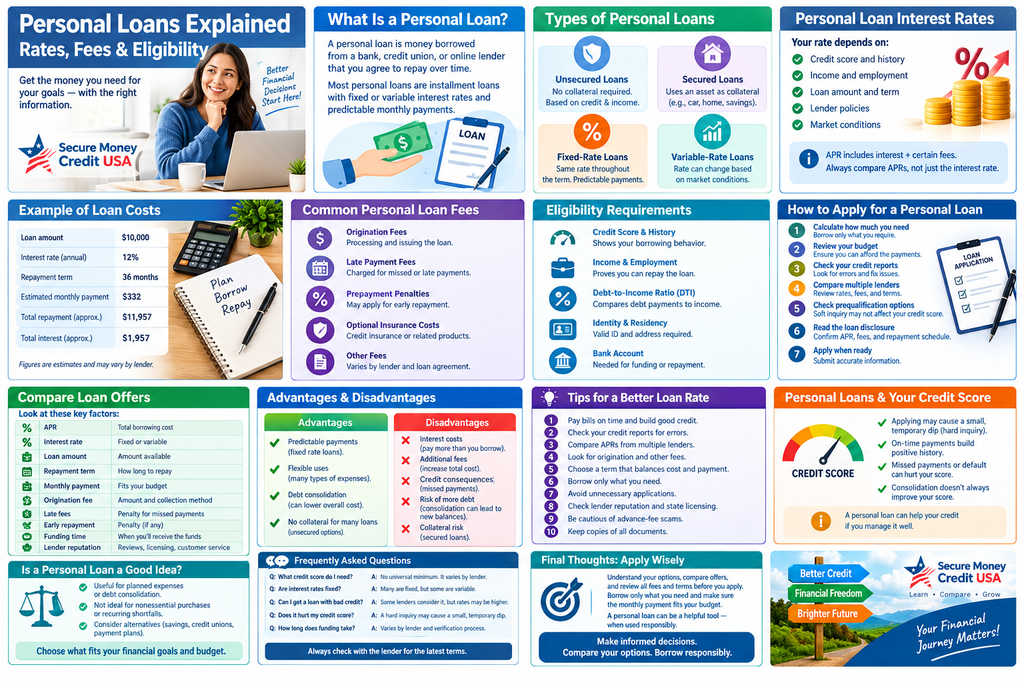
Personal Loans Explained: Rates, Fees, and Eligibility
A personal loan can help you cover unexpected expenses, consolidate high-interest debt, or pay for a major purchase. However, before borrowing money, it is important to understand personal loan interest rates, fees, eligibility requirements, and repayment terms.
Personal loans explained simply means understanding how these loans work, how much they cost, and how to decide whether borrowing is right for your financial situation.
In this guide, you will learn how personal loans work in the United States, what lenders look for when reviewing applications, which fees to check, and how to compare loan offers responsibly.
1.What Is a Personal Loan?
- How personal loans work
- Personal loan for beginners
- Personal loan guide USA
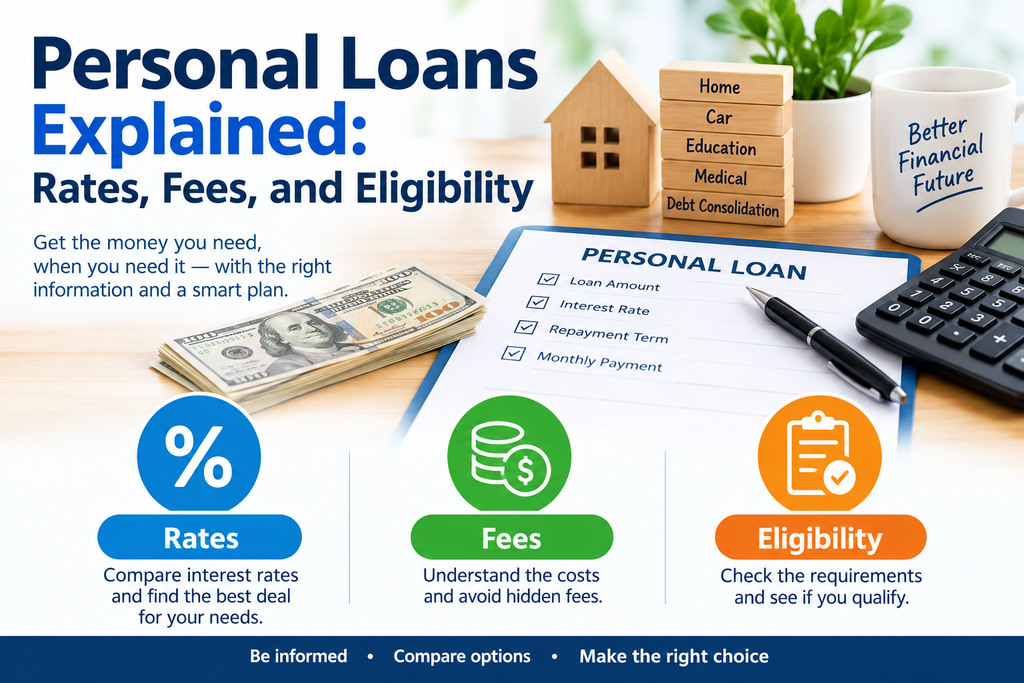
A personal loan is money borrowed from a bank, credit union, or online lender that you agree to repay according to specific terms. Most personal loans are installment loans, meaning you repay the borrowed amount through scheduled payments over a set period.
Many personal loans have fixed interest rates and predictable monthly payments, although loan terms vary by lender.
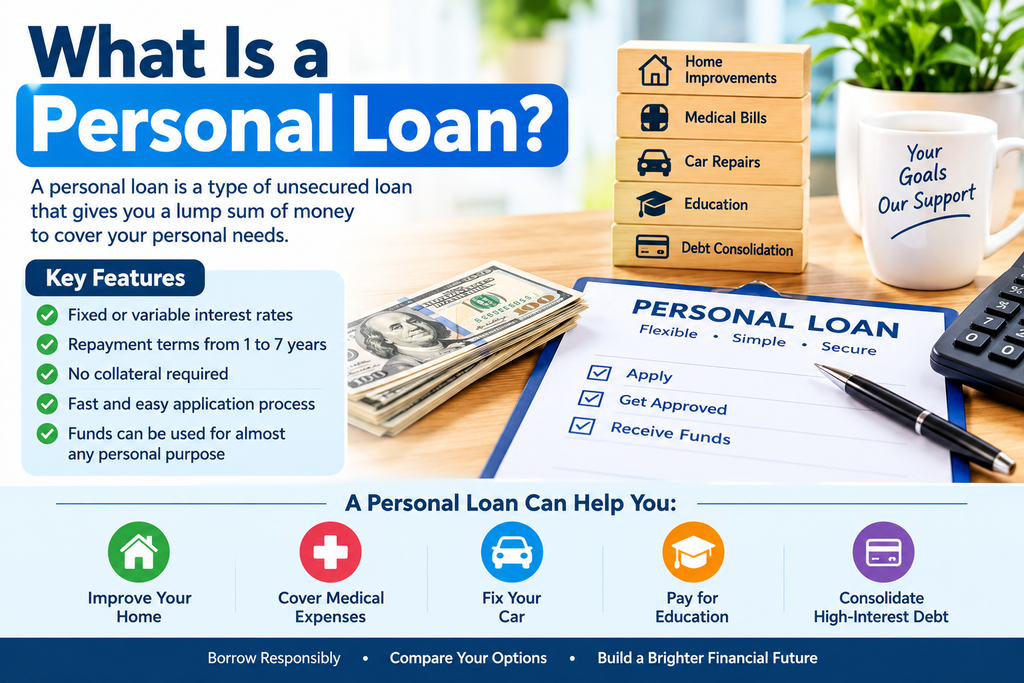
For example, someone might use a personal loan to pay for home repairs, consolidate credit card balances, or cover an unexpected expense.
Before applying, review the lender’s terms carefully to understand the total repayment amount and any additional charges.Also, approval and funding are not guaranteed.this knowledge and information guide.
2.How Do Personal Loans Work?
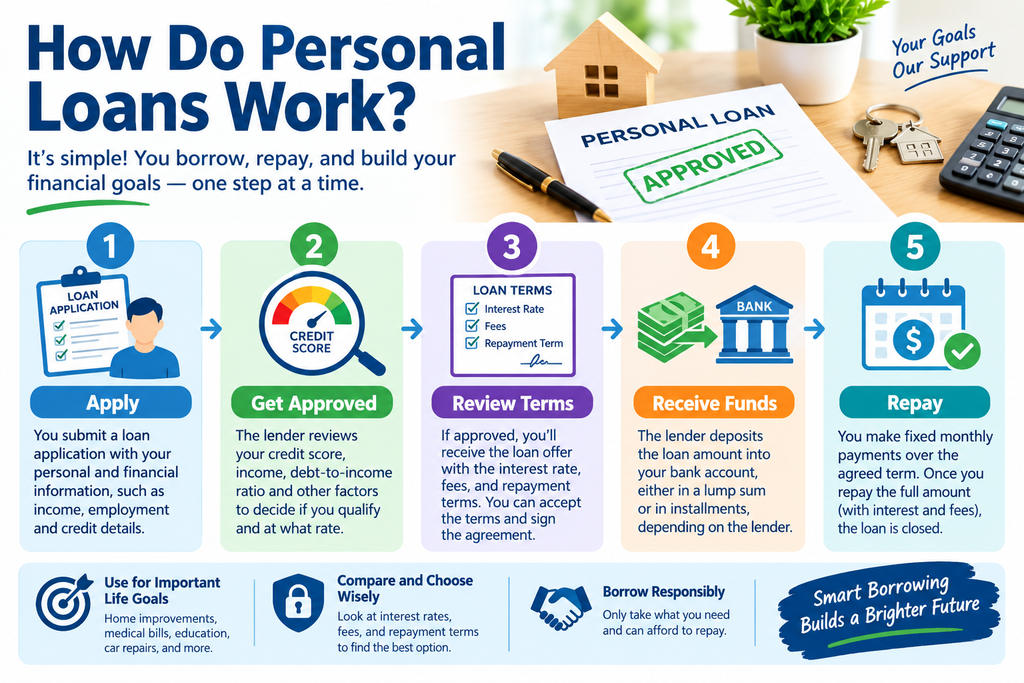
Personal loans generally follow these steps:
- Choose a loan amount: Estimate how much money you actually need.
- Compare lenders: Review interest rates, annual percentage rates (APRs), fees, and repayment periods.
- Submit an application: Provide the information the lender requests.
- Complete the lender’s review: The lender evaluates your creditworthiness and ability to repay.
- Review the loan agreement: Check the amount financed, payment schedule, APR, and fees.
- Receive the funds: If approved and you accept the offer, the lender disburses the loan according to its terms.
- Repay the loan: Make your scheduled payments until the balance is paid off.
- Approval, funding speed, and available loan amounts depend on the lender and your circumstances.
3.Types of Personal Loan
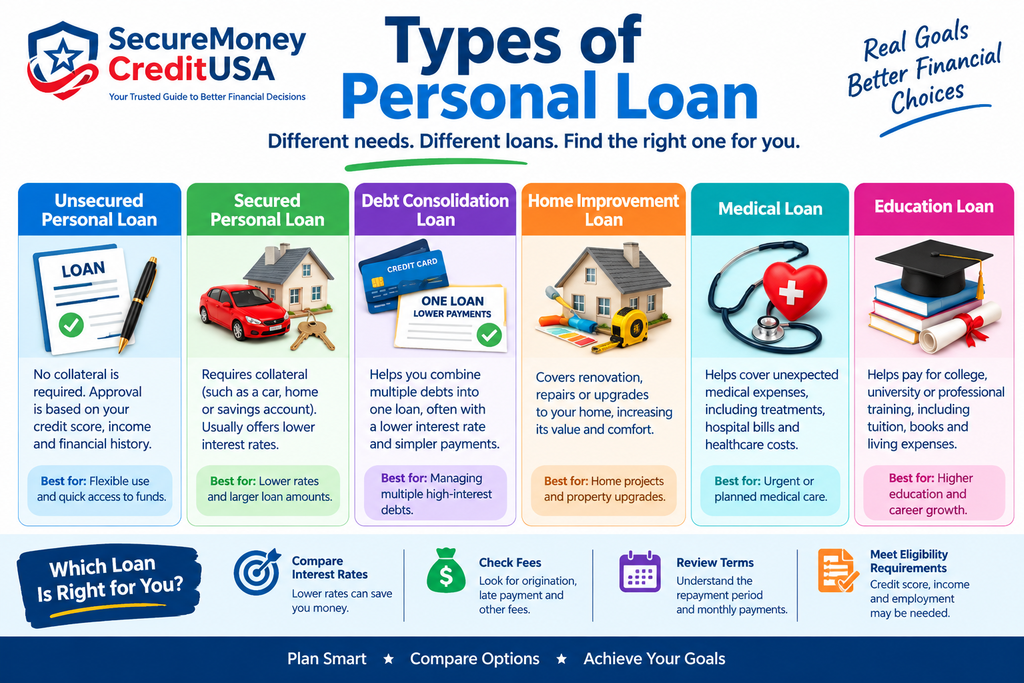
Understanding the different types of personal loans can help you compare your options.
1. Unsecured Personal Loans
An unsecured personal loan generally does not require collateral, such as a car or house. Lenders instead evaluate factors such as your credit history, income, existing debts, and other application details.
These loans may have higher interest rates for applicants considered higher risk.
- Possible uses: Eligible expenses, unexpected bills, or planned purchases.
- Potential benefit: You usually do not pledge a specific asset as collateral.
- Risks: Rates may be higher for some borrowers, and missed payments can harm credit and lead to collection activity.
2.Secured personal Loans:-
A secured loan requires collateral, which could be an eligible vehicle, savings account, or another asset, depending on the lender.
- Possible benefit: Collateral may help some eligible borrowers qualify or obtain different terms.
- Risks: If you default, the lender may be entitled to seize or claim the pledged collateral, subject to the contract and applicable law.
- Check carefully: The asset being pledged, fees, APR, and default conditions.
Carefully consider the risk of losing an asset before choosing a secured loan.
1. Fixed-Rate Personal Loans
A fixed-rate personal loan keeps its interest rate unchanged throughout the agreed term, unless the contract provides otherwise. This generally makes monthly payments more predictable.
2. Variable-Rate Personal Loans
A variable-rate loan has an interest rate that can change under the agreement. Your borrowing costs or payments may increase or decrease depending on the rate terms.
3.Debt consolidation Loans
A debt consolidation loan combines eligible debts into a new loan. For example, a borrower might use the proceeds to pay off several credit card balances.
- Possible benefit: One scheduled payment may be easier to manage.
- Potential savings: Savings are possible if the new loan’s APR and fees are lower and the repayment plan is suitable.
- Risks: A longer repayment term may increase total interest, even if the monthly payment falls. Continuing to use paid-off credit cards can also increase debt.
Before consolidating, compare the new loan’s APR, fees, total repayment amount, and repayment length with your current debts.
4.Home improvement loans
Some personal loans can be used for eligible home repairs, renovations, or upgrades. Other home improvement financing options may be secured by the property.
- Possible uses: Repairs, renovation materials, or eligible upgrades.
- Potential benefit: An unsecured personal loan may avoid using your home as collateral.
- Risks: Borrowing costs can be significant, and a renovation does not guarantee an increase in property value.
Confirm that the lender allows your intended use of the funds.
5. Medical expense financing
Borrowers may use certain personal loans or specialized medical financing to pay eligible healthcare expenses.
- Possible uses: Eligible treatment bills, dental care, or other out-of-pocket expenses.
- Compare first: Ask the healthcare provider about payment plans and review the financing APR, fees, promotional terms, and payment deadlines.
- Risks: Promotional financing can become expensive if its conditions are not met.
A “medical loan” is a general description, not one standardized loan product. Review the actual agreement before borrowing.
6.Education-related financing
Education expenses may be financed through federal student loans, private student loans, or certain personal loans where the lender permits the intended use.
- Important distinction: Federal and private student loans have different eligibility rules, borrower protections, and repayment options. Personal loans generally do not provide the same student-loan benefits.
- Before borrowing: Compare the total cost, repayment schedule, eligibility requirements, and available student aid.
- Check the purpose: Some personal-loan lenders restrict educational uses.
For eligible U.S. students, review federal student aid options before relying on an ordinary personal loan.
4.Personal Loan Interest Rates Explained
interest is the cost of borrowing money. Your personal loan interest rate may depend on your credit history, income, debt obligations, loan amount, repayment term, lender policies, and broader market conditions.
Applicants with stronger credit profiles may qualify for lower rates, but no particular rate is guaranteed.
What Is APR on a Personal Loan?
APR stands for Annual Percentage Rate. It helps you understand borrowing costs by incorporating the interest rate and certain loan fees into an annualized percentage.
When comparing personal loans, look at APRs alongside the monthly payment and total amount you will repay.
A loan with a lower advertised interest rate is not necessarily cheaper if it carries substantial fees.
Interest rates, APR, and fees
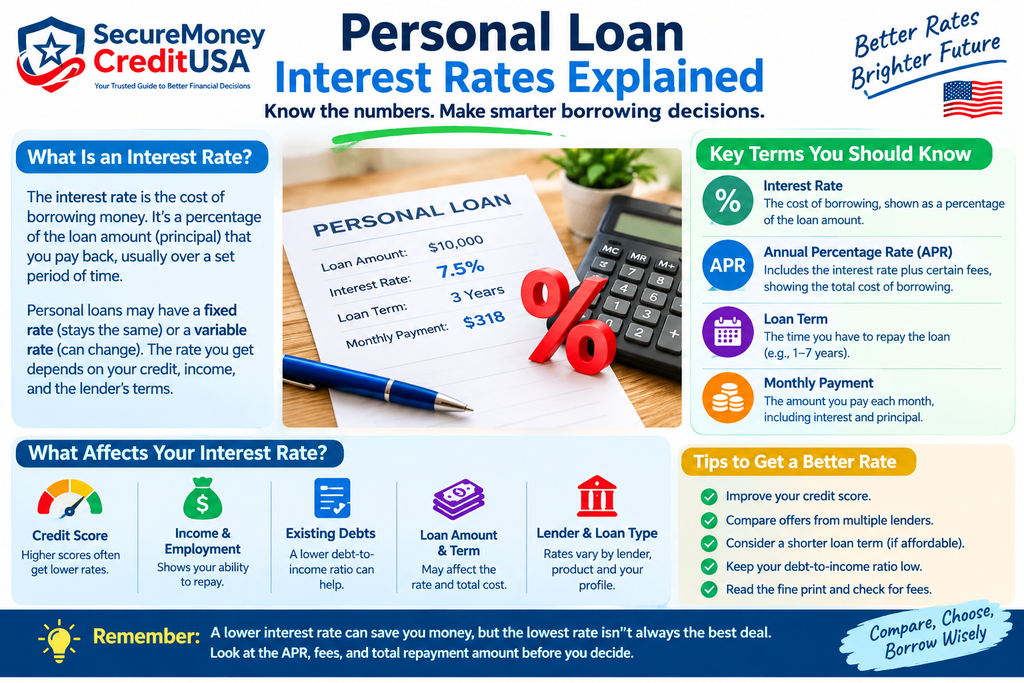
The interest rate is the cost of borrowing the principal. The annual percentage rate (APR) reflects the interest rate plus certain loan charges, making it useful for comparing offers. Check for these costs before signing:Origination or processing feesLate-payment feesOptional credit or disability insurancePrepayment charges, if applicableAny other charges listed in the loan disclosures
For more information, read the Consumer Financial Protection Bureau’s explanation of interest rates and APR.
5.Common Personal Loan Fees
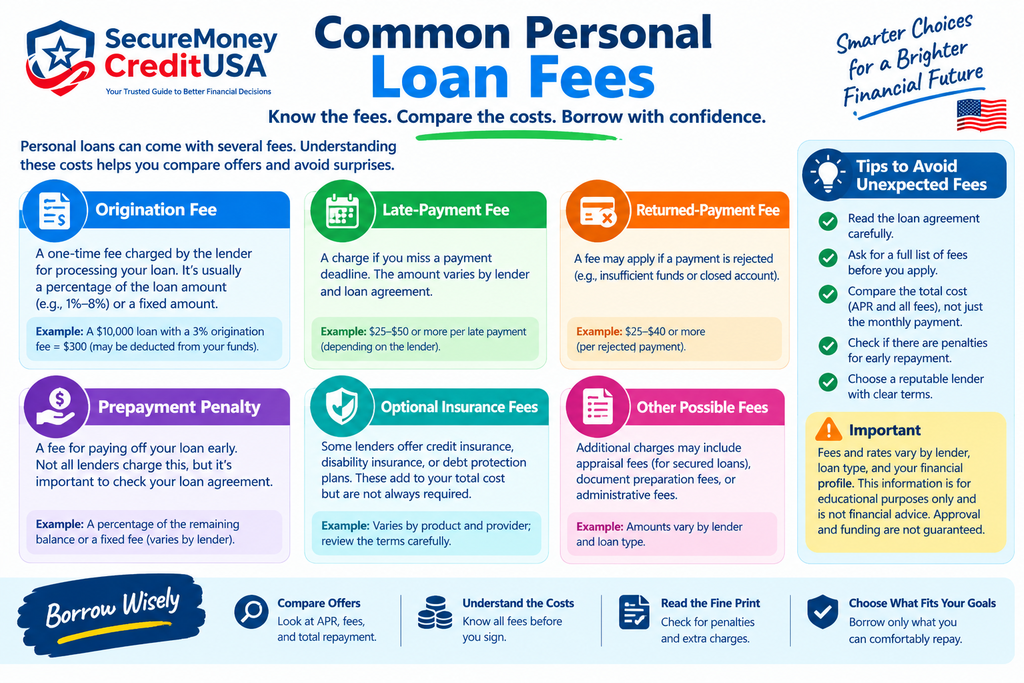
Interest is not the only cost to consider. Personal loans may include additional fees that increase the total amount you pay.
1. Origination Fees
An origination fee covers certain costs associated with processing and issuing a loan. Some lenders deduct this fee from the loan proceeds, meaning you might receive less money than the amount you borrow.
2. Late Payment Fees
A lender may charge a fee if you miss a payment or pay after the due date, depending on the agreement and applicable law.
3. Prepayment Penalties
Some loan agreements may impose a charge for paying off a loan early. Check your contract to determine whether a prepayment penalty applies.
4. Optional Insurance Costs
Some lenders offer credit insurance or related products. Review whether these products are optional, what they cover, and what they cost before agreeing to purchase them.
5. Other Contractual Fees
Depending on the lender and agreement, other charges may apply. Review all disclosures before signing.
The CFPB’s guide to personal installment loan fees explains common charges and the importance of checking loan documents.
6.Personal Loan Eligibility Requirements
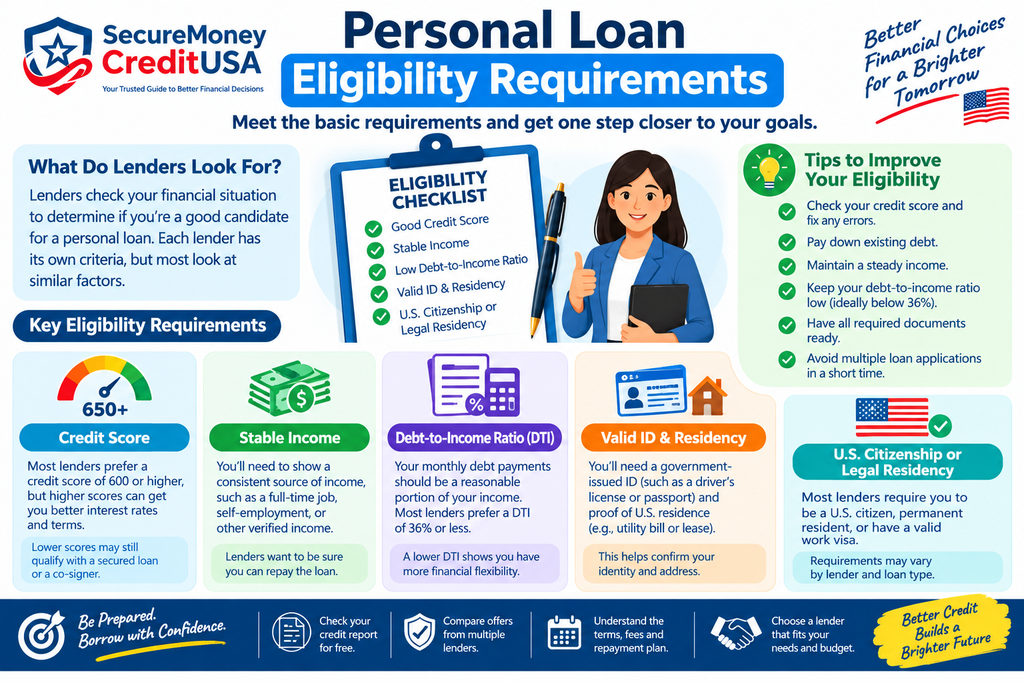
Personal loan eligibility varies by lender. There is no single credit score or income level that guarantees approval everywhere.
1. Credit Score and Credit History
Lenders may review your credit score and credit reports to assess how you have handled borrowing in the past.
A stronger credit history can improve your chances of qualifying for favorable terms, although lenders use different approval criteria.
2. Income and Employment
Lenders may ask for information about your income, employment, or other sources of funds to evaluate whether you can afford the payments.
Some lenders accept qualifying income from sources other than traditional employment.
3. Debt-to-Income Ratio
Your debt-to-income ratio, or DTI, compares your monthly debt payments with your gross monthly income.
For example, if your gross monthly income is $5,000 and your monthly debt payments total $1,500, your DTI is 30%.
Lenders may use DTI alongside other factors when evaluating an application. Their requirements differ.
4. Identity and Residency
A lender may require identification, a valid address, and evidence that you meet its residency and other eligibility requirements.
5. Bank Account and Financial Information
Some lenders require a bank account for funding or repayment. The exact requirements depend on the lender.
7.How to Apply for a Personal Loan
follow these steps before submitting an application.
Step 1: Calculate how much you need.
Borrow only the amount necessary for your planned expense.
Step 2: Review your budget.
Estimate whether you can comfortably afford the monthly payment alongside housing, food, utilities, insurance, and other obligations.
Step 3: Check your credit reports.
Review your credit information for errors and address any issues you identify.
Step 4: Compare multiple lenders.
Compare banks, credit unions, and reputable online lenders. Review APR, fees, loan terms, and payment amounts.
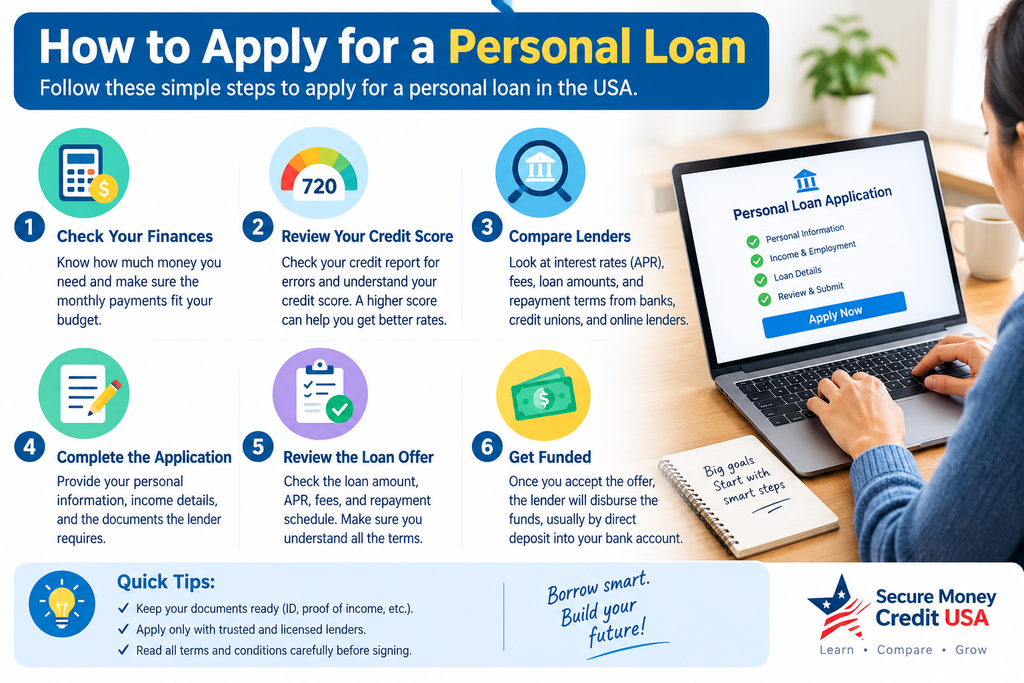
Step 5: Check prequalification options.
Some lenders allow you to check potential offers using a soft credit inquiry. Ask whether the process affects your credit score. A full application may require a hard inquiry.
Step 6: Read the loan disclosure.
Confirm the APR, amount financed, monthly payment, repayment schedule, and any penalties or fees.
Step 7: Apply only when ready.
Submit accurate information and keep copies of the loan agreement and related disclosures.
8.Advantages and Disadvantages of Personal Loans
Advantages
- Predictable payments: Fixed-rate loans can make budgeting easier.
- Flexible uses: Some personal loans can cover several types of personal expenses.
- Debt consolidation: A loan may simplify repayment when replacing several eligible debts, provided the overall cost is favorable.
- No collateral for many loans: Unsecured loans generally do not require you to pledge an asset.
Disadvantages
- interest costs: You generally repay more than you borrow.
- Additional fees: Origination and other charges can increase the cost.
- Credit consequences: Missed payments can damage your credit history.
- Risk of additional debt: Consolidating credit cards does not prevent balances from building up again.
- Collateral risk: Secured loans may put your pledged asset at risk.
Whether a personal loan is appropriate depends on your financial circumstances and the terms offered.
9.Tips for Getting a Personal Loan at a Competitive Rate
- Pay existing bills on time and maintain a responsible credit history.
- Check your credit reports for inaccuracies.
- Compare APRs from several lenders.
- Look for origination fees and other charges.
- Choose a repayment term that balances affordability with total cost.
- Borrow only what you need.
- Avoid submitting unnecessary applications.
- Check the lender’s reputation and relevant state licensing.
- Be cautious of anyone guaranteeing approval in exchange for an advance fee.
- Keep a copy of every document you sign
The Federal Trade Commission provides guidance on recognizing advance-fee loan scams.
10.Personal Loans and Your Credit Score
Applying for a personal loan and repaying it can affect your credit in different ways.
A hard inquiry may cause a small, temporary decrease in your credit score. Opening a new loan can also affect the average age and mix of your credit accounts.
Making payments on time can help establish a positive payment history when the lender reports the account to credit bureaus. Missing payments, defaulting, or allowing a debt to go into collections can harm your credit.
Debt consolidation does not automatically improve your credit score. Its impact depends on your overall credit profile and what you do with your existing balances.
11.Are Personal Loans a Good Idea?
A personal loan may be useful when you understand the costs, have a clear purpose, and can comfortably afford repayment.
For example, consolidating higher-interest debt may make sense if the new loan has a lower overall borrowing cost and you avoid accumulating new debt.
However, borrowing for nonessential purchases or using a loan to cover recurring budget shortfalls can make financial problems worse.
Before applying, consider alternatives such as building an emergency fund, negotiating a payment plan, checking credit-union options, or discussing payment arrangements directly with a service provider.
The best choice is the one that fits your circumstances without putting essential expenses or long-term financial stability at risk.
Final Thoughts: Apply for a Personal Loan Wisely
Understanding how to apply for a personal loan can help you make informed financial decisions and avoid unnecessary borrowing costs. Before applying, review your credit report, calculate how much you can afford to repay, and compare loan offers from banks, credit unions, and reputable online lenders.
Pay close attention to the annual percentage rate (APR), origination fees, monthly payments, repayment period, and total amount you will repay. Never accept a loan offer without understanding its terms and conditions. Remember that approval, interest rates, and funding times depend on the lender and your financial circumstances.
A personal loan may be useful for certain planned expenses or debt consolidation, but borrowing is not always the best solution. Consider your budget, compare available alternatives, and borrow only what you genuinely need.
Conclusion
Understanding personal loans, interest rates, fees, and eligibility can help you make more informed borrowing decisions.
Before accepting an offer, compare APRs, review all charges, calculate the monthly payment, and confirm that repayment fits your budget. Do not borrow more than you need or rely on advertised rates as a guarantee of approval.
With careful research and responsible planning, you can decide whether a personal loan is an appropriate option for your financial goals.
Disclaimer:
This article is for educational and informational purposes only. It is not individualized financial, legal, tax, or credit advice, and it does not guarantee loan approval or any particular interest rate. Loan availability, fees, eligibility criteria, and legal requirements vary by lender and state. Review the applicable disclosures and consult a qualified professional when necessary.
At , securemoneycreditusa@securemoneycreditusagmail-com
our goal is to provide clear, educational personal finance information to help readers understand credit, loans, budgeting, and responsible money management.