
How to Build Credit in the USA: A Beginner’s Guide (2026)
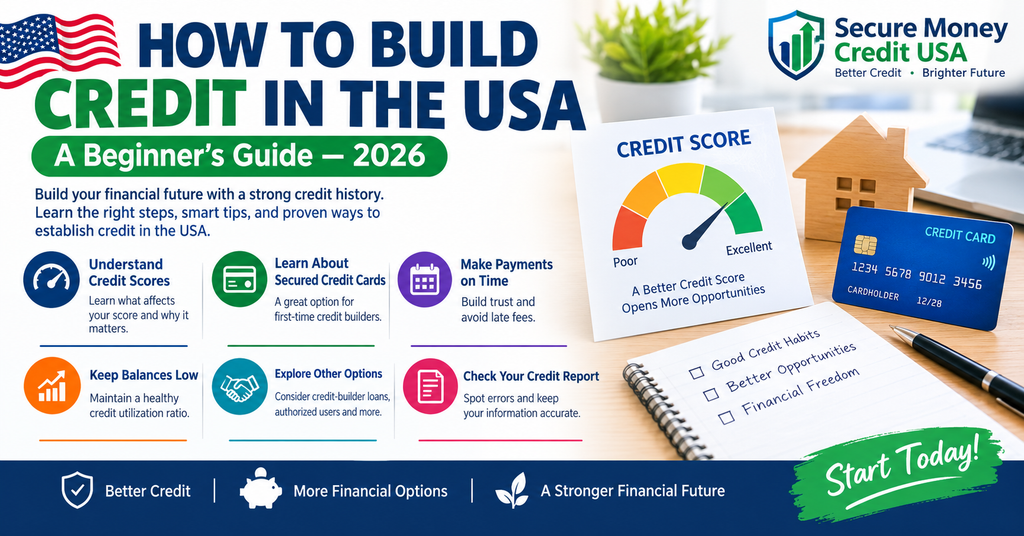
Building credit in the United States is an important step toward managing your personal finances. A positive credit history may help you qualify for credit cards, personal loans, auto loans, and other financial products. It can also influence the interest rates and terms lenders offer you.
However, building credit for the first time can feel confusing. You may wonder whether you need a credit card, how credit scores work, or how long it takes to establish a credit history.
The good news is that you do not need to borrow large amounts of money to start building credit. You can begin with a manageable credit account, make payments on time, and maintain responsible financial habits.
This beginner’s guide explains how to build credit in the USA in 2026, including secured credit cards, credit-builder loans, authorized-user accounts, credit utilization, and credit report monitoring.

What you will learn:
- What credit scores are and why they matter.
- How to start building credit with little or no credit history.
- How secured credit cards work.
- How payment history and credit utilization affect credit scores.
- Which credit-building mistakes to avoid.
- How to monitor your credit reports.
What Is Credit and Why Is It Important?
1.What Is Credit and Why Is It Important?
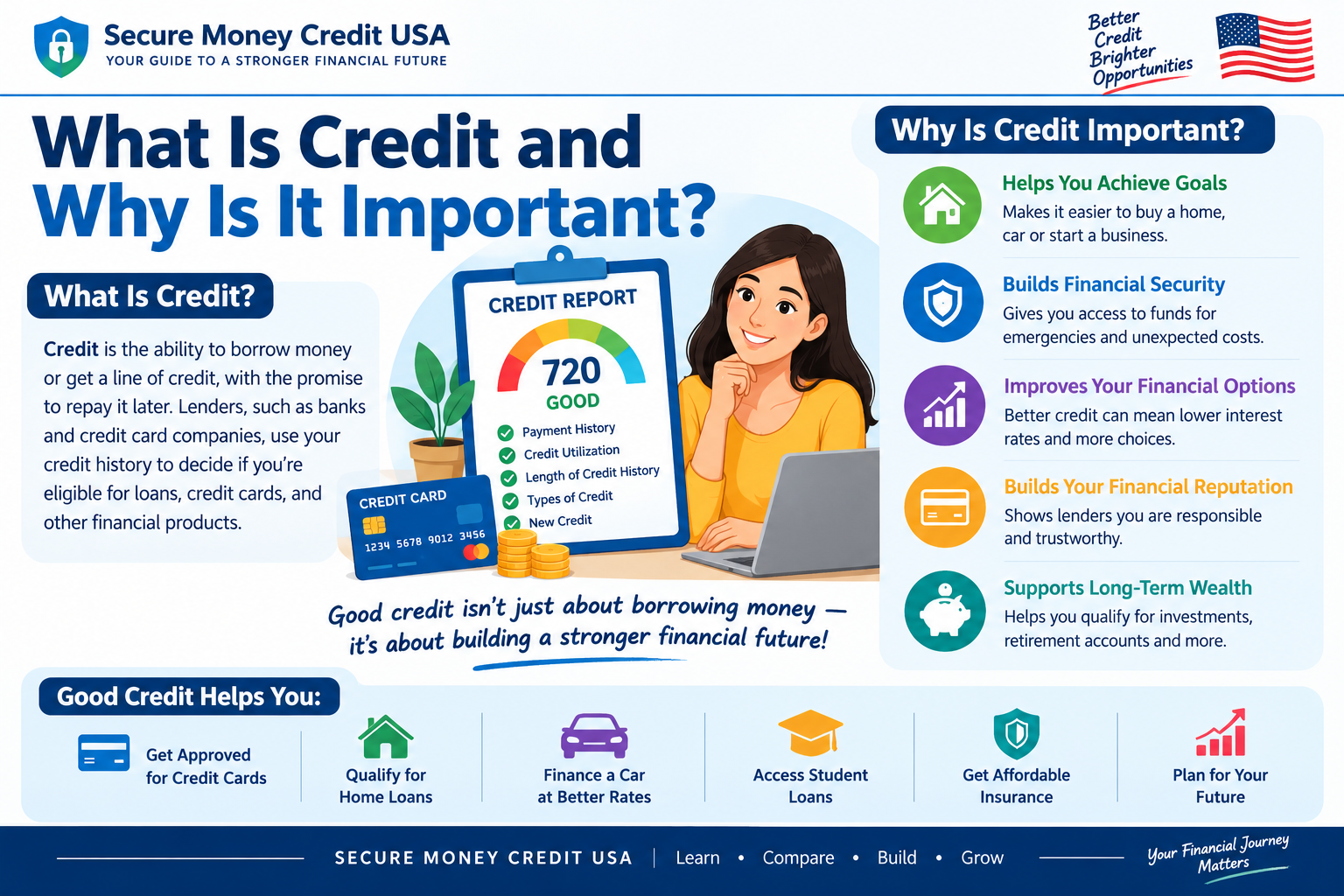
Credit refers to money you borrow with an agreement to repay it. Your credit history records information about certain borrowing and repayment activities, including credit card accounts and loans.
Credit is an arrangement that allows you to borrow money or obtain goods and services with an agreement to pay later.
In the United States, credit accounts can include credit cards, personal loans, auto loans, and mortgages. Information about many of these accounts may be reported to credit reporting companies.
Credit reporting companies collect information from participating lenders and other data providers to create credit reports. Credit scoring models use information from credit reports to calculate credit scores.
Your credit history can show information such as your accounts, payment records, balances, and how long you have used credit.
Lenders may use credit reports and credit scores when evaluating applications. However, they can also consider other factors, including income, existing debt, and their own eligibility requirements.
In the United States, the three major nationwide credit reporting companies are Equifax, Experian, and TransUnion.
A positive credit history may help you:
- Qualify for certain credit cards and loans.
- Obtain more favorable borrowing terms.
- Demonstrate your repayment history to lenders.
- Apply for housing where credit checks are used.
- Establish a stronger financial profile over time.
Credit requirements vary by lender and product. Having a good credit score does not guarantee approval, and other factors, such as income and existing debt, may also matter.
2.Why Is Building Credit Important?
Building credit can help you establish a financial history that lenders may consider when evaluating applications.
Here are some potential benefits of maintaining a positive credit history.
1. Applying for Credit Cards
credit card issuers often evaluate applicants’ credit histories and other information before approving applications.
Someone with limited credit history may have fewer options than someone who has demonstrated responsible credit use. However, some cards are designed for beginners.
2. Applying for Loans
Credit history may be one factor lenders consider when reviewing applications for personal loans, auto loans, or mortgages.
A stronger credit profile may help some applicants qualify for more favorable terms, depending on the lender and the product.
3. Understanding Borrowing Costs
Interest rates and fees can affect the total cost of borrowing.
Lenders may consider credit information when determining the terms offered to applicants. Comparing multiple offers can help you understand the overall cost before accepting a loan.
4.Preparing for Future Financial Goals
How to build credit in the USA
Building credit is one part of financial planning. Other important habits include saving money, maintaining an emergency fund, managing debt, and making a realistic budget.
A good credit history does not replace these financial habits, but it may support your long-term plans.
3.What Is a Credit Score?
What Is a Credit Score? A Beginner’s Guide (2026)
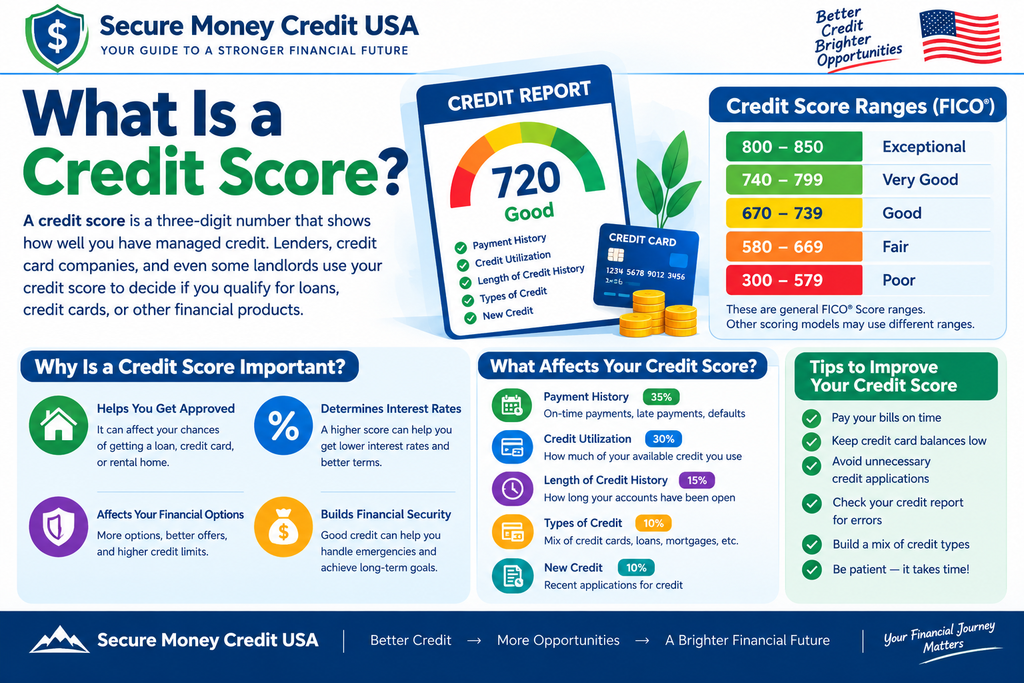
Good credit score in the USA.
A credit score is a number calculated from information in a credit report using a particular scoring model.
Two widely known credit scoring systems in the United States are FICO and VantageScore. Different models can produce different scores from similar credit information.
Many commonly used FICO scores range from 300 to 850, although scoring products and ranges can vary.
A higher score generally indicates lower estimated credit risk under the model being used. It does not guarantee that a lender will approve an application.
What Factors Affect Your Credit Score?
Credit scoring models can consider several aspects of your credit history.
1. Payment history
Your history of making payments on time is an important factor in many widely used credit scoring models. Late payments can harm your credit profile.
2. Credit utilization
Credit utilization measures how much of your available revolving credit you are using.
For example, if your credit card limit is $1,000 and your reported balance is $200, your utilization is 20%.
Keeping balances low relative to your credit limits can help your credit profile.
A commonly suggested guideline is to keep utilization below 30%, although lower utilization may be beneficial for some scoring models and situations.
3. Length of credit history
The age of your accounts and the length of your credit history can affect your scores. Building a positive history generally takes time.
4. New credit applications
Applying for several credit accounts within a short period can lead to multiple hard inquiries and may affect your scores.
5. Credit mix
Your experience managing different types of credit may be considered by some scoring models.
You do not need to open unnecessary accounts simply to have different types of credit.
4.How to Build Credit in the USA:
7 Practical Steps
Step 1: Check Whether You Already Have a Credit Report
Before applying for a new credit product, check whether you already have a credit history.
You may have a credit report if you previously used a credit card, took out a loan, or were added as an authorized user to an eligible account.
You can obtain your eligible free credit reports through the federally authorized
website:AnnualCreditReport.com
Review your reports for:
- Accounts you recognize.
- Correct personal information.
- Payment history.
- Outstanding balances.
- Incorrect late-payment records.
- Accounts that may indicate identity theft.
You may not have a credit score if your credit history is too limited to meet a scoring model’s requirements. Having no score does not automatically mean you have bad credit.
Step 2: Consider a Secured Credit Card
A secured credit card is one option for people who are new to credit or cannot qualify for certain traditional credit cards.
With many secured cards, you provide a refundable security deposit. The card issuer generally uses the deposit as collateral, and your credit limit may be based on the deposit amount.
For example, a card requiring a $300 deposit might provide a $300 credit limit, subject to the issuer’s terms.
You can then use the card for eligible purchases and repay the amount you owe.
Before applying, check whether the issuer reports account activity to Equifax, Experian, and TransUnion.
Also review the annual fee, APR, deposit requirements, and other charges.
A secured card does not guarantee credit-score improvement. Its usefulness depends partly on responsible use and the issuer’s reporting practices.
Step 3: Make Every Payment on Time
paying your credit obligations by their due dates is one of the most important habits for building a positive credit history.
Consider these practical steps:
- Set up payment reminders.
- Enable automatic payments if appropriate.
- Make sure your bank account has enough money for scheduled payments.
- Review your statements regularly.
- Contact your lender promptly if you anticipate difficulty making a payment.
If you use a credit card, paying the statement balance in full by the due date can help you avoid interest on purchases when your account’s terms provide a grace period and you qualify for it.
Paying only the minimum may keep your account current if the payment arrives on time, but interest can accumulate on the remaining balance.
Step 4: Keep Your Credit Card Balances Low
Your credit utilization is the percentage of your available revolving credit that you are using.
Consider this example:
- Credit limit: $1,000
- Reported balance: $100Credit
- utilization: 10%
If the reported balance rises to $700, utilization becomes 70%.
Higher utilization can negatively affect some credit scores, so it is sensible to avoid using a large portion of your available limit.
You do not need to carry debt or pay interest to build credit.
A practical approach is to make small purchases you can afford, monitor your balance, and pay your statement balance in full whenever possible.
Remember that the balance reported to credit bureaus may differ from your balance on the day you check your account.
Step 5: Explore a Credit-Builder Loan
A credit-builder loan is another possible option for establishing a credit history.
Unlike a conventional personal loan that gives you money upfront to spend, a typical credit-builder loan places the loan proceeds in a secured savings account or similar arrangement while you make scheduled payments.
When the loan is completed, you receive the funds according to the agreement, minus any applicable fees or charges.
Before signing up, check:
- Whether payments are reported to the major credit bureaus.
- The interest rate and total fees.The repayment schedule.
- When you can access the funds.
- What happens if you miss a payment.
A credit-builder loan may be useful for some beginners, but it is not necessary for everyone. Compare the total cost with the potential benefit before applying.
Step 6: Consider Becoming an Authorized User
Some credit card issuers allow a primary cardholder to add another person as an authorized user.
Depending on the issuer’s reporting practices and the scoring model, the authorized user’s credit report may benefit from the account’s positive history.
If you are considering this option, ask a trusted family member or another person who manages credit responsibly.
Look for an account with:
- A consistent on-time payment history.
- Low balances relative to its credit limit.
- No recent serious delinquencies.
- Reporting practices that include authorized users.
Confirm that the issuer reports authorized-user information to the credit bureaus.
Be aware that account activity and reporting rules vary. Negative information or high balances may not help, and becoming an authorized user does not guarantee a credit score.
Step 7: Monitor Your Credit Reports
Reviewing your credit reports helps you understand your credit history and identify possible mistakes.
Check for:
- Incorrect balances.
- Payments incorrectly marked late.
- Accounts you do not recognize.
- Duplicate negative entries.
- Incorrect personal details.
- Accounts that should have been closed.
If you identify an error, follow the dispute process provided by the relevant credit reporting company and, where appropriate, the company that supplied the information.
Keep copies of supporting documents and records of your communications.
You can also use reputable credit-monitoring services to track changes. Remember that a credit report and a credit score are different: a report contains account information, while a score is calculated using a scoring model.
5.How Long Does It Take to Build Credit?
There is no universal timeline for establishing a credit history or reaching a particular credit score.
- Whether you already have a credit report.
- When your first credit account begins reporting.
- The type of account you open.
- Whether payments are made on time.
- The scoring model used.
- The information contained in your credit reports.
Some scoring models require a minimum amount of credit history before they can generate a score.
For example, a FICO score generally requires at least one account that has been open for six months or longer and has been reported to a credit bureau within the relevant period.
This does not mean everyone will receive a score after exactly six months.The best strategy is to build consistent, responsible habits rather than chase a specific score by a particular date.
Conclusion:
Start Building Credit With Consistent Habits
Learning how to build credit in the USA is an important step toward managing your financial future
Start by understanding your credit reports, comparing suitable credit-building options, paying bills on time, and keeping credit card balances manageable.
You do not need to open several accounts or borrow more money than you can afford. A carefully chosen credit product and consistent payment habits can help you establish a positive credit history over time.
Review your credit reports, understand the terms of any financial product you consider, and avoid companies that promise guaranteed results.
This article is for general educational and informational purposes only. It does not constitute financial, legal, tax, or credit-repair advice. Credit scoring models, lender requirements, fees, interest rates, and financial product terms vary. No credit score, approval, or financial outcome is guaranteed. Verify current information with the relevant financial institution and credit reporting company before making financial decisions.