How to Build an Emergency Fund in the USA (2026 Guide)
Unexpected expenses can happen at any time. Your car may need an unexpected repair, you may receive a medical bill, or you may temporarily lose your job. Without savings, these situations can put pressure on your monthly budget and may force you to borrow money.
Learning how to build an emergency fund can help you prepare for financial surprises and reduce your dependence on credit cards or personal loans.
In this guide, you will learn how emergency funds work, how much money you may need, where to keep your savings, and how to create a realistic savings plan in the United States.
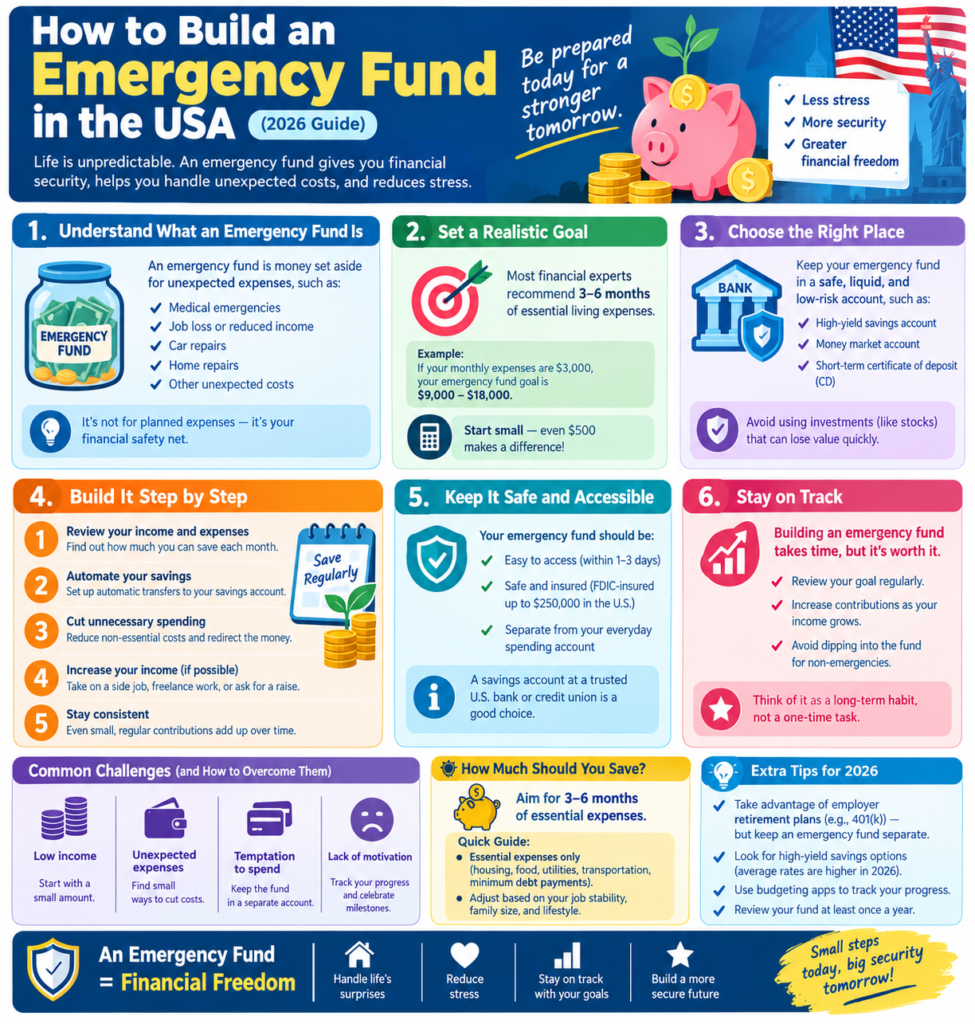
1.What Is an Emergency Fund?
An emergency fund is money set aside specifically for unexpected and necessary expenses. It is separate from the money you use for regular monthly bills, shopping, entertainment, and planned purchases.
Common reasons to use an emergency fund include:
- Unexpected medical expenses not covered by insurance.
- Essential car repairs needed to get to work.
- Urgent home repairs, such as a broken heating system.
- Necessary expenses during temporary unemployment.
- Emergency travel for an urgent family situation.
An emergency fund is not intended for planned holidays, routine shopping, or regular monthly bills that you can reasonably anticipate.
According to the Consumer Financial Protection Bureau (CFPB), even a small amount of emergency savings can provide some financial security. The appropriate amount depends on your circumstances.
2.Why Is an Emergency Fund Important in the USA?
The cost of an unexpected expense can vary considerably between households. A relatively small repair may be manageable for one person but financially difficult for another.
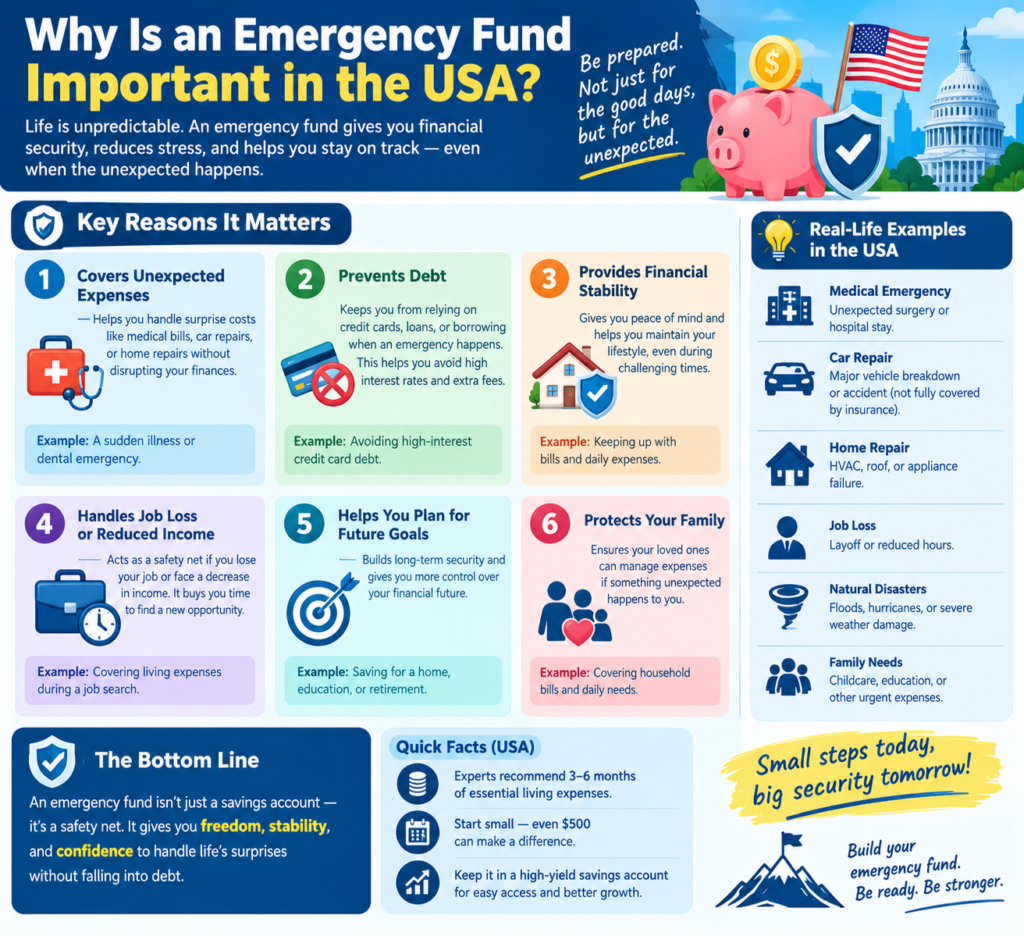
An emergency fund can help you:
1. Reduce reliance on borrowing
Without savings, you may need to use a credit card or loan to pay an unexpected bill. Borrowing can add interest and fees to the original expense.
2. Protect your monthly budget
Using dedicated savings for an emergency can help you keep up with essential bills, such as rent, utilities, food, and transportation.
3. Prepare for income interruptions
If you experience a temporary reduction in income or lose your job, savings can help cover necessary expenses while you look for another source of income.
4. Avoid withdrawing long-term investments prematurely
A cash reserve may reduce the need to sell investments at an inconvenient time, although it cannot eliminate every financial risk.
5. Improve financial confidence
Knowing that you have money set aside for emergencies can make unexpected expenses easier to manage.
3.How Much Should You Save in an Emergency Fund?
There is no single emergency fund target that works for everyone. Your goal should reflect your essential monthly expenses, income stability, household responsibilities, insurance coverage, and access to other reliable resources.
A commonly used planning guideline is to build savings equal to three to six months of essential living expenses. People with irregular income, dependents, or limited backup resources may prefer a larger reserve.
If saving several months of expenses seems difficult, begin with a smaller milestone, such as $500 or $1,000, and gradually increase it.
Emergency Fund Examples
| Essential monthly expenses | 3-month target | 6-month target |
| $1,500 | $4,500 | $9,000 |
| $2,000 | $6,000 | $12,000 |
| $2,500 | $7,500 | $15,000 |
| $3,000 | $9,000 | $18,000 |
| $4,000 | $12,000 | $24,000 |
These are illustrative calculations, not mandatory savings requirements.
For this calculation, include essential expenses such as housing, basic groceries, utilities, transportation, insurance premiums, necessary healthcare, and minimum debt payments. Exclude discretionary purchases that you could pause during an emergency.
3.What Expenses Should You Include?
When calculating your emergency fund, focus on expenses you would need to cover during a financial setback.
Include:
- Rent or mortgage payments.
- Basic groceries and household supplies.
- Electricity, water, gas, and essential communication services..
- Transportation and necessary vehicle expenses.
- Health, auto, renters, or homeowners insurance premiums.
- Necessary healthcare expenses.
- Minimum required payments on existing debts.
You may be able to reduce discretionary spending, such as entertainment, dining out, or nonessential shopping, during an emergency.
How to Calculate Your Personal Savings Target
Use this simple formula:
Emergency fund target = Essential monthly expenses × Number of months you want to cover
For example, suppose your essential monthly expenses are $2,400 and you want to prepare for three months of expenses.
$2,400 × 3 = $7,200.
Your initial target would be $7,200. You could work toward that amount gradually rather than trying to save it all at once.
4.How to Build an Emergency Fund Step by Step
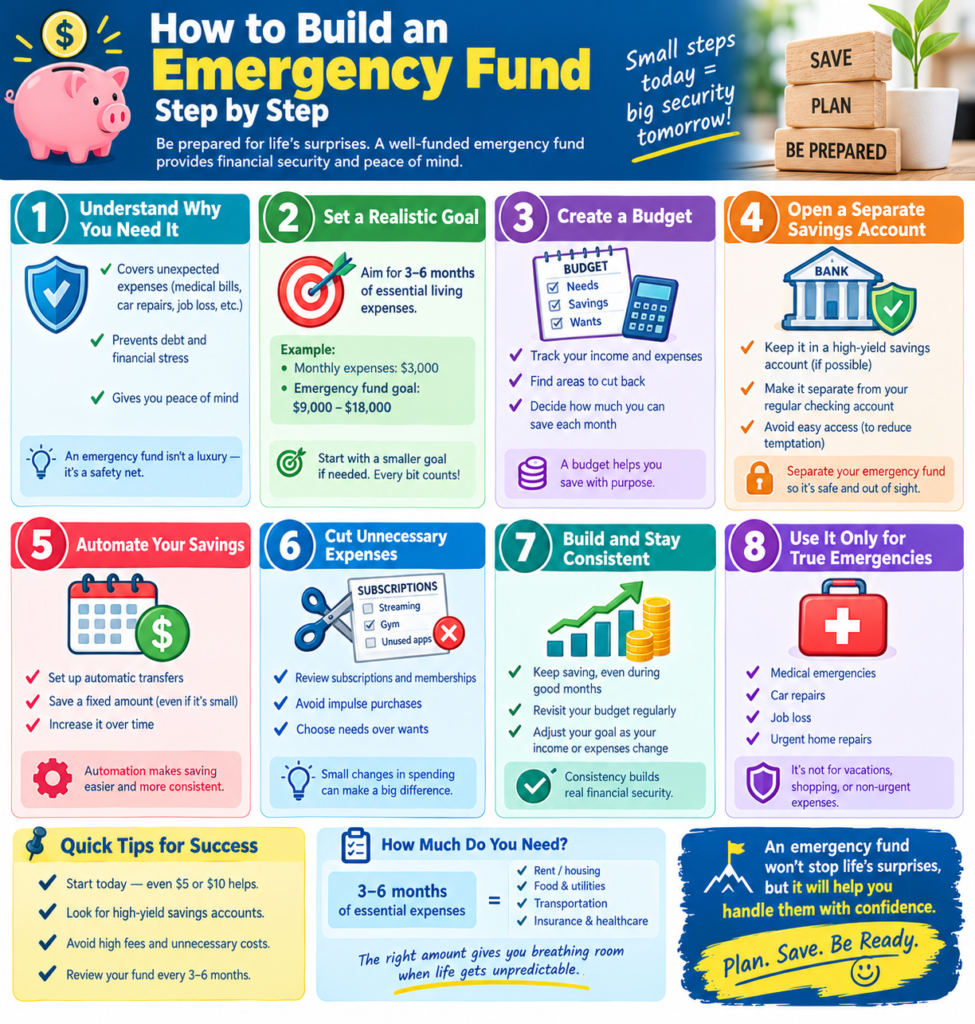
Creating an emergency fund becomes easier when you divide the process into manageable steps.
Step 1: Calculate Your Essential Monthly Expenses
The first step is understanding how much money you need for essential living costs.
Review your recent bank statements, bills, and monthly budget. Separate necessary expenses from optional purchases.
For example, your essential monthly expenses might look like this:
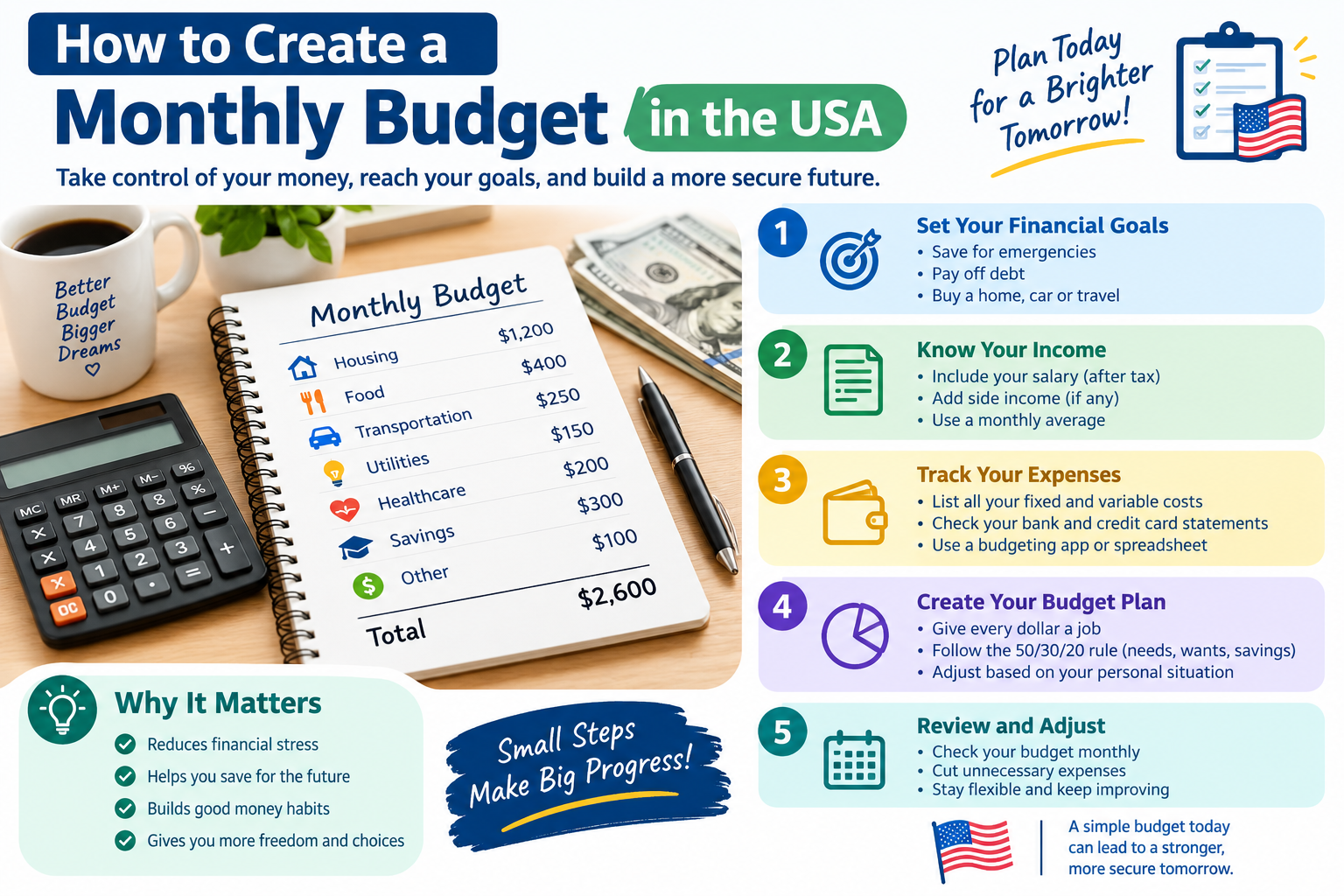
Expense andMonthly Amount:-
- Rent $1,000
- Groceries $350
- Utilities $150
- Transportation $200
- Insurance and necessary healthcare $200
- Minimum debt payments $100
- Total=$2,000
This example assumes $2,000 in essential expenses per month. Your actual costs may be higher or lower.
For help organizing your expenses, read our related guide: How to Create a Monthly Budget in the USA.How to Create a Monthly Budget in the USA
Step 2: Set a Realistic Initial Savings Goal
A large emergency fund target can feel overwhelming, especially if you are starting with no savings.
Instead, create smaller milestones.
For example:
- First goal: Save $250.
- Second goal: Increase savings to $500.
- Third goal: Reach $1,000.
- Fourth goal: Save one month of essential expenses.
- Long-term goal: Work toward three to six months of essential expenses, if appropriate.
These are suggested milestones, not mandatory amounts. Choose a target that fits your income and obligations.
The purpose is to build a consistent savings habit without neglecting essential needs.
Step 3: Create a Monthly Savings Plan
Decide how much you can save after accounting for essential bills and other financial obligations.
Suppose you save $100 each month:
- 3 months$300
- 6 months$600
- 12 months$1,200
- 24 months$2,400
Your actual balance may be higher if your account earns interest, or lower if you make withdrawals or incur fees.
Choose an amount you can maintain consistently rather than setting an unrealistic target that causes you to miss essential payments.
Step 4: Automate Your Savings
consider arranging a recurring transfer from your checking account to a separate savings account after payday
.For example, you could transfer $25, $50, or $100 per paycheck, depending on your budget.
Check your account balance and scheduled bills before setting up automatic transfers. Adjust the amount if your income changes or the transfer could cause an overdraft.
Step 5: Reduce Expenses Where Practical
Review your spending to identify costs you can reduce without compromising essential needs.
Possible examples include:
- Canceling subscriptions you rarely use.
- Comparing insurance policies when renewal time arrives.
- Reducing unnecessary delivery or convenience fees.
- Planning meals and grocery purchases.
- Reviewing mobile phone and internet plans.
- Limiting impulse purchases.
You do not need to eliminate every enjoyable activity. The aim is to identify sustainable changes that free up money for savings.
Step 6: Save Part of Extra Income
If you receive a work bonus, cash gift, or tax refund, consider directing a portion toward your emergency fund.
For example, if you receive an unexpected $600 payment, you might save $300 and use the remainder for other priorities. The appropriate split depends on your immediate needs and financial obligations.
Do not assume that a tax refund or bonus will occur every year. Build your regular savings plan around income you can reasonably expect.
Step 7: Choose a Suitable Savings Account
Consider a separate savings account at an eligible, federally insured bank or credit union.
A suitable account should offer:
- Convenient access to your money.
- Clear information about fees and withdrawal conditions.
- Competitive interest, if available.
- Appropriate federal deposit insurance.
- Easy ways to monitor your balance.
A high-yield savings account may offer a higher interest rate than some standard savings accounts, but rates and conditions vary. Compare the annual percentage yield (APY), minimum balance requirements, fees, and transfer times before opening an account.
Step 8: Review Your Progress Regularly
Check your savings balance monthly or whenever you review your budget.
If you receive a pay increase, reduce an expense, or pay off a debt, consider directing some of the newly available money toward emergency savings.
If your expenses increase or your income falls, revise your target and contribution amount. A flexible plan is more sustainable than a rigid one.
5.Where Should You Keep an Emergency Fund?
The main priorities are safety, accessibility, and separation from everyday spending.
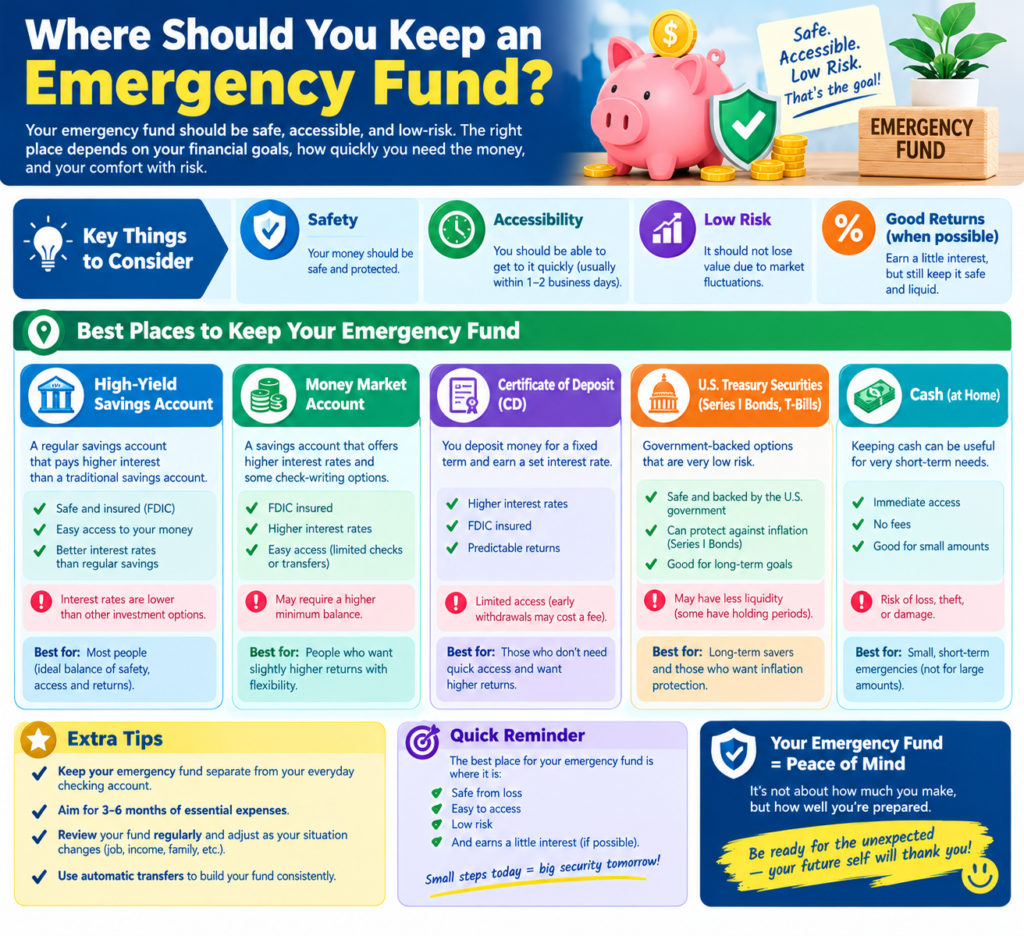
Savings account: A regular savings account at an FDIC-insured bank or an NCUA-insured credit union is a common choice. Verify the institution’s insurance status and applicable coverage limits.
High-yield savings account: This may provide a competitive return while keeping money relatively accessible. Review withdrawal procedures, fees, account terms, and transfer delays.
Cash at home: A modest amount of cash may be useful during a temporary payment-system disruption or certain emergencies. However, cash can be lost, stolen, or damaged and does not earn interest.
Certificates of deposit (CDs): Some CDs offer fixed terms, but early withdrawal may incur penalties. Because emergency money needs to be accessible, check the restrictions carefully before using a CD.
Avoid putting money you may need immediately into volatile investments, such as individual stocks or cryptocurrency. Their value can fall precisely when you need the money.
6.Should You Build an Emergency Fund While Paying Off Debt?
Your approach depends on your essential expenses, debt costs, and financial stability.
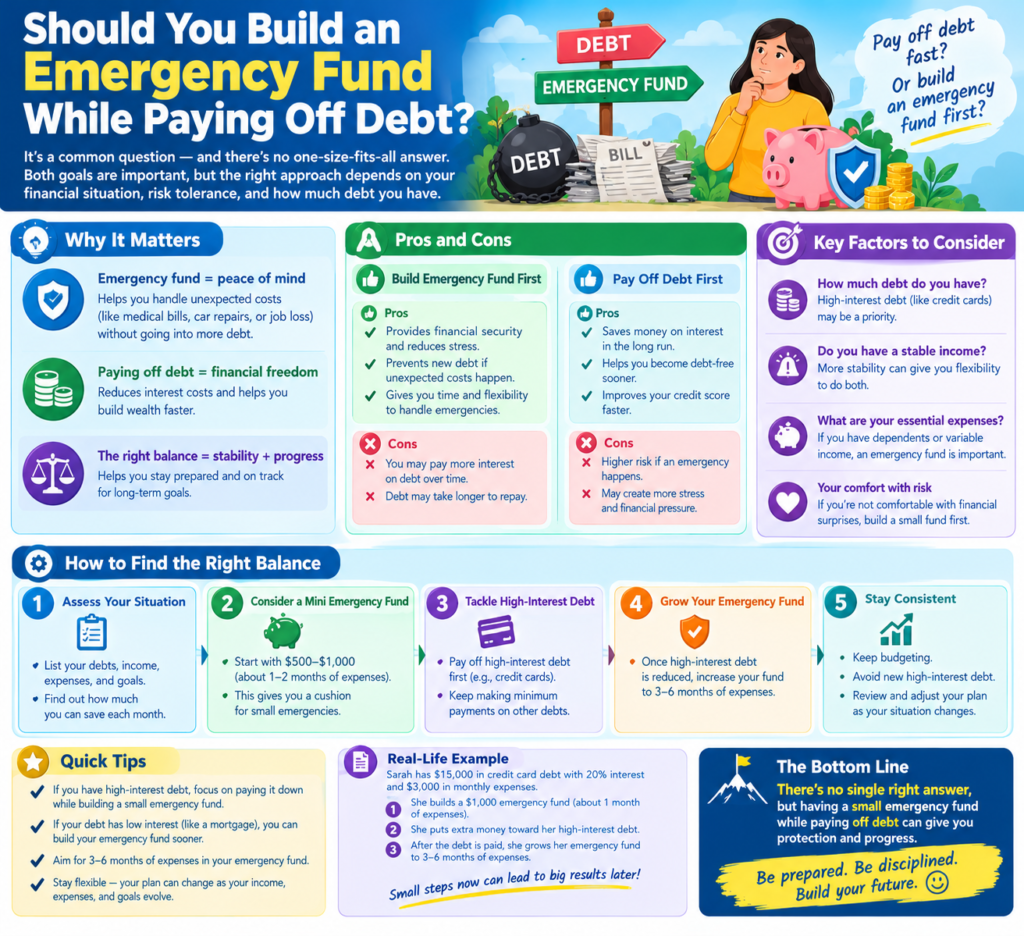
If you have no emergency savings, building a small initial reserve may help you handle a minor financial shock without taking on additional debt. At the same time, continue meeting required minimum debt payments.
If you carry high-interest credit card debt, compare the cost of that debt with the benefits of keeping additional cash savings. Once you have an initial reserve, you may choose to direct more money toward expensive debt while continuing to save.
7.Common Emergency Fund Mistakes to Avoid
Setting an unrealistic target: Start with a manageable amount and increase it over time.
Keeping savings in everyday spending money: A separate account can make it easier to monitor your progress.
Investing money needed for emergencies: Market-based investments can lose value and may not be readily available when required.
Ignoring account fees: Maintenance charges and withdrawal restrictions can reduce the usefulness of your savings.
Using the fund for non-emergencies: Establish clear guidelines for what qualifies as an urgent, necessary expense.
Failing to rebuild savings: If an emergency requires you to withdraw money, update your plan and work toward replenishing the balance.
Frequently Asked Questions
1. How much money should a beginner have in an emergency fund?
A beginner can start with a realistic initial milestone, such as $500 or $1,000, if affordable. The longer-term goal may be three to six months of essential living expenses, depending on individual circumstances.
2. Can I build an emergency fund on a low income?
Yes. Start with an amount that fits your budget, even if it is small. Review essential expenses, save when possible, and increase contributions when your income or circumstances improve. Do not sacrifice food, housing, necessary healthcare, or other essential needs to meet an arbitrary savings target.
3. Is an emergency fund better than a savings account?
An emergency fund is a savings goal, not a separate type of financial product. Many people keep their emergency fund in a dedicated savings account so that it remains accessible and separate from everyday spending.
4. Should I keep my emergency fund in a checking account?
A checking account provides convenient access, but it may make the money easier to spend on routine purchases. A separate savings account may help you keep track of funds reserved for emergencies. Compare fees, access, and account terms before deciding.
5. Is a high-yield savings account good for emergency savings?
It can be suitable if the account offers appropriate deposit insurance, reasonable access, and acceptable fees and conditions. Interest rates can change, and transfers may not always be immediate.
Conclusion
Learning how to build an emergency fund in the USA starts with understanding your essential expenses, setting a realistic target, and saving consistently.
You do not need to reach a large savings goal overnight. Begin with an affordable amount, consider automatic transfers, choose an appropriate savings account, and review your progress regularly.
An emergency fund cannot prevent unexpected financial problems, but it may help you manage them with less reliance on borrowing. Start with your current circumstances and build toward a reserve that supports your financial needs.
For more info:-
Consumer Financial Protection Bureau (CFPB)Best for emergency savings strategies, savings goals, and practical budgeting guidance.https://www.consumerfinance.gov/an-essential-guide-to-building-an-emergency-fund/
For more learning:-How to Build an Emergency Fund in the USA (2026 Guidance)
For more information about saving for unexpected expenses and building financial security, visit the “Federal Deposit Insurance Corporation (FDIC)” (https://www.fdic.gov/consumer-resource-center/2025-01/saving-unexpected-and-your-future).
FDIC – Saving for the Unexpectedhttps://www.fdic.gov/consumer-resource-center/2025-01/saving-unexpected-and-your-future
Financial education disclaimer:
This article is for general informational and educational purposes only. It is not individualized financial, investment, tax, or legal advice. Savings needs and suitable financial products vary by individual. Verify account terms, interest rates, fees, and applicable deposit insurance directly with the relevant financial institution or government agency before making financial decisions.